
Why "Your Labs Are Normal" Might Be the Most Dangerous Thing Your Doctor Says
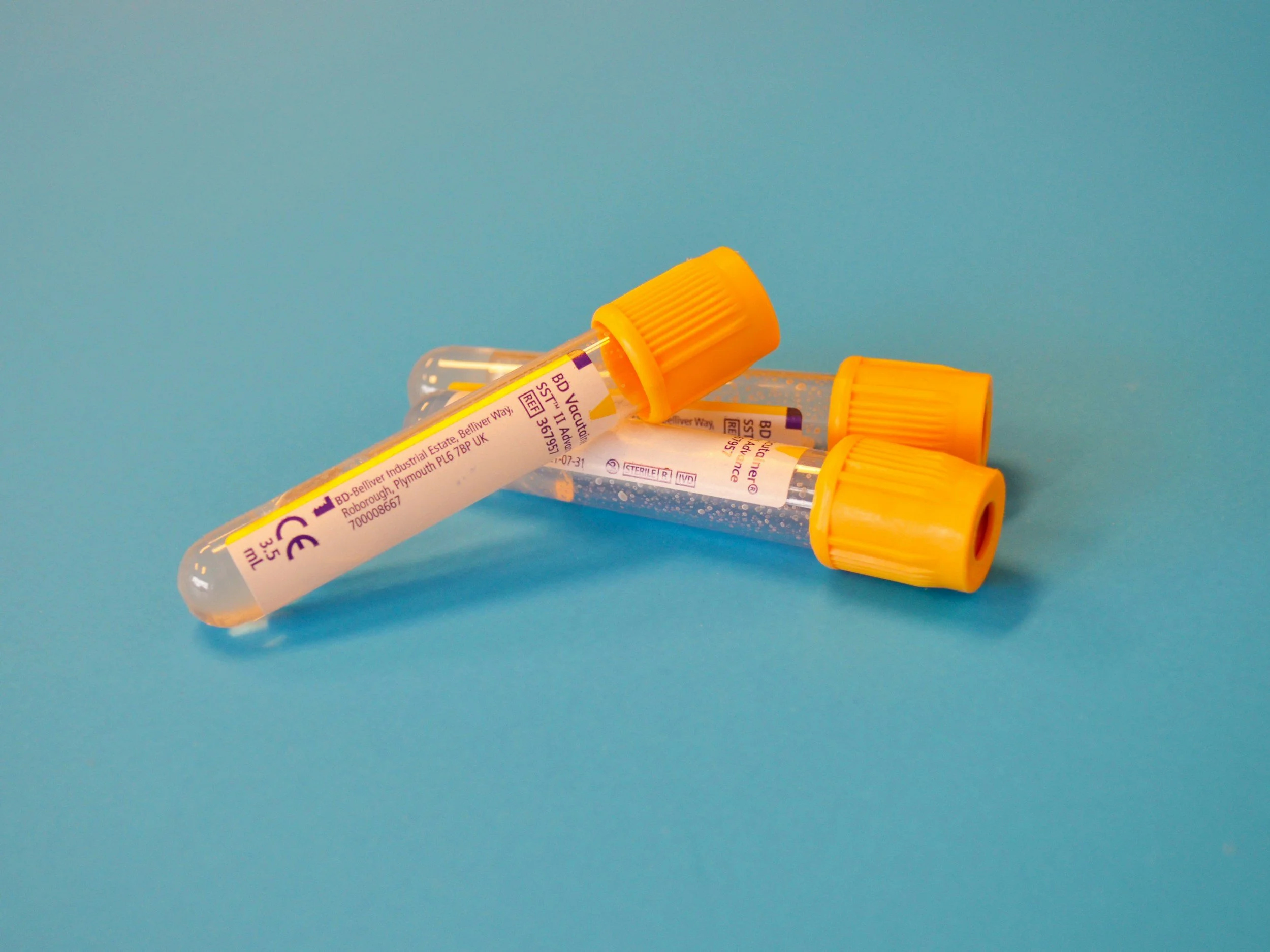
You've heard it before.
You walked out of that appointment with a printout, a few numbers highlighted, and a doctor who looked you in the eye and said everything looks fine.
And you stood there thinking: fine? Because you're exhausted in a way that sleep doesn't fix. Your hair is coming out in the shower. Your weight won't move no matter what you do. You're cold when everyone else is comfortable.
The labs that were supposed to give you answers just told you nothing is wrong.
Your labs said nothing is wrong because they were designed to find disease. They were never designed to find you.
Where "Normal" Actually Comes From
Lab reference ranges are calculated by pulling data from a large population and identifying what's statistically average. You're "normal" if you fall within 2 standard deviations of the mean.
That sounds rigorous. Until you look at who's in that population.
People who are sedentary. Chronically stressed. Nutrient depleted. Symptomatic. "Normal" is a statistical reflection of a largely unwell population. It's not a measure of what optimal health actually looks like.
When your doctor says your labs are normal, she's saying: your numbers look like most other people's numbers. In a country where chronic disease is epidemic, that is not the reassurance it sounds like.
3 Places "Normal" Fails You Most
The thyroid that's "fine" but isn't. The most widely ordered thyroid test is TSH, which is a pituitary hormone, not a thyroid hormone. It measures your brain's signal to your thyroid, not whether your thyroid is making hormones or whether your immune system is attacking thyroid tissue right now. A functional thyroid panel includes 5 markers. Most providers order 1.
The cholesterol that's "fine" but isn't. Standard lipid panels measure LDL cholesterol concentration. Apolipoprotein B measures LDL particle number, and particle count is a more accurate predictor of cardiovascular risk. You can have a normal LDL and a dangerously elevated Apo B. Your standard panel won't catch it.
The blood sugar that's "fine" but isn't. A1C measures your average blood sugar over 3 months. What it cannot tell you is what your insulin is doing. Insulin resistance starts a decade or more before A1C ever becomes abnormal. C-Peptide reveals that pattern years early. Most annual physicals don't include it.
What Functional Interpretation Does Differently
At Magnolia, I read labs through a root-cause lens. I'm not asking whether your numbers crossed the threshold of disease. I'm asking whether your numbers reflect optimal function and what patterns emerge when I look at your markers together.
Functional reference ranges are narrower. They're calibrated around research on where your biomarkers need to be for your body to actually work well.
I'm looking at your Reverse T3 in the context of your Free T3. Your hsCRP alongside your metabolic markers. What your homocysteine tells me about your methylation pathways. Same data. More complete analysis.
You Deserve More Than "Normal"
If you've been told your labs are fine and you still feel terrible, that disconnect is real. It's common. And it's not something you have to accept.
Your symptoms are data. Your experience is valid. And your labs, read through the right lens, may have quite a bit more to say.