
What Is Apolipoprotein B? And Why Your Cardiologist Cares More Than Your PCP Does

For decades, LDL cholesterol has been the number. The one your doctor circles. The one that determines whether you leave with a statin prescription or a handout about eating less saturated fat.
Cardiovascular research has moved on. One of the most important places it's moved is a marker called Apolipoprotein B.
Cholesterol Amount vs. Particle Count
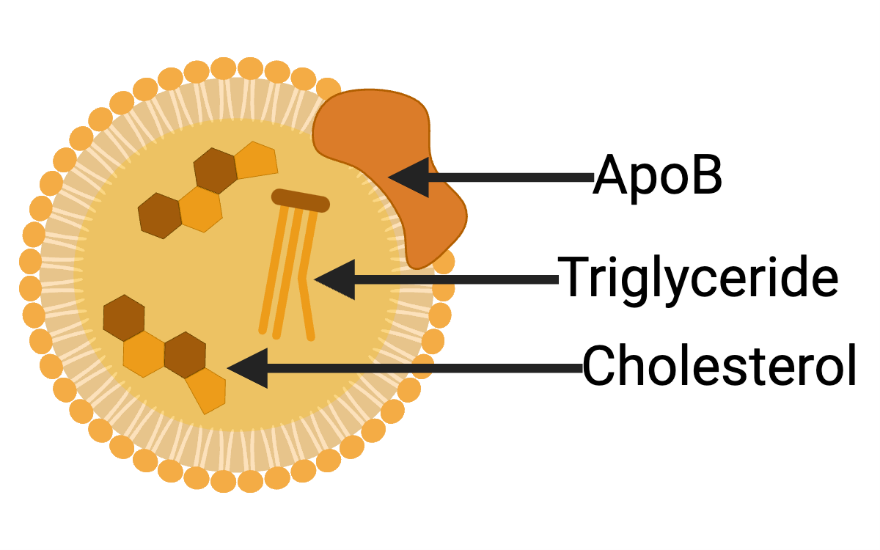
Standard LDL testing measures the amount of cholesterol carried inside LDL particles. Apolipoprotein B measures the number of particles themselves.
Think of it like traffic on a highway. You could measure the total weight of all the vehicles, or you could count the number of cars. If you want to know accident risk, vehicle count is more informative than total weight.
Apolipoprotein B is the protein that sits on the surface of every LDL particle, one Apo B molecule per particle. So Apo B is a direct count of the atherogenic (plaque causing) particles in your blood. Particle number, more than cholesterol concentration, drives plaque formation in your arteries.
When LDL Looks Fine but Apo B Doesn't
Normal LDL. Elevated Apo B. This is the scenario that matters.
Small, dense LDL particles carry less cholesterol per particle than large, buoyant ones. A person with many small dense LDL particles can have a normal LDL cholesterol number while carrying an elevated particle count and cardiovascular risk their standard panel never revealed.
This pattern is common in metabolic syndrome, insulin resistance, high triglycerides, and low HDL. It's disproportionately prevalent in Black Americans, who face the highest cardiovascular mortality rates in the US.
Why Most PCPs Don't Order It
Cardiologists know this marker. Many lipidologists use it as their primary cardiovascular risk metric. It hasn't made it into standard primary care panels yet, partly inertia, partly slow guideline uptake.
Patients don't ask for it by name, so it doesn't get ordered. I order it on everyone because I'd rather know.
What to Do With This Information
If your Apo B comes back elevated, the interventions aren't dramatically different from elevated LDL, but the specificity matters. We track treatment response more accurately. We identify people at risk before their cholesterol numbers give them away.
We also contextualize your lipid picture alongside your hsCRP, your insulin markers, and the rest of your metabolic profile. That's where the real clinical picture lives.
The Magnolia Lab Deep-Dive Bundle includes Apolipoprotein B alongside your full lipid panel, metabolic markers, and inflammation markers, interpreted together. -> stan.store/MagnoliaMed
This post is for educational purposes only and does not constitute medical advice, diagnosis, or treatment.